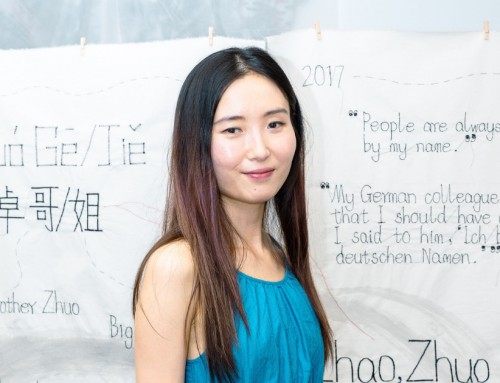

FLINTA* Voices: ONE IN THREE by Melisa Savcıözen
FLINTA* Voices create space to speak without restriction, without dilution, and without apology. We opened our platform to FLINTA* writers and creators who confront and redefine gendered realities, who understand empowerment not as a trend, but as necessity, and who expose patriarchy not as abstraction, but as lived experience.
ONE IN TREE
One in three women knows exactly what I’m about to tell you. One in three… Do the
math. Count the women in your life. Then count again.
They closed my investigation. The file was stamped, catalogued, placed into a drawer
as if ink could turn a body into paperwork. As if a decision could fold a living memory
into silence.
Move on, they said. It will only traumatize you more…Accept it. Let go. Focus on
your healing, there is no justice…
But what does healing mean in a system that survives on forgetting?
If I had accepted it, I would have betrayed the girl who cried under the covers, who
learned to swallow her voice in crowded rooms and laugh at the right moments so
no one would feel uncomfortable. I would have told her that survival requires silence.
That justice is optional. That pain is inconvenient.
So I refused.
I called the lawyers. One after another. No chance, they said. The system is slow. The
evidence is weak. It will take years. It will cost you. It will break you.
Door after door closed with professional politeness. Not cruel. Not violent.
But something in me would not let the drawer stay shut.
And the investigation is reopened. They started doing the things they should have
done 3 years ago. The file is back on a desk. Someone is required to take a look.
It is not a cinematic victory. There are no trumpets. No clean ending. Only another
round of questions, another waiting room, another night where sleep comes in
fragments.
Because this is the part we rarely say out loud: surviving does not restore you to who
you were.
I fought. I won this round. And yet, I still don’t fully recognise my own face. The
mirror reflects a woman who has learned how heavy institutions can be. There is a
steadiness in her eyes, but also a distance. The kind you acquire when you have
stood inside a system designed to exhaust you into disappearance.
They told me what to do as if my body did not belong to me.
They said my voice was too loud. They abandoned my case.
They told me to be smaller, quieter and easier to handle.
They told me I had no chance.
What they meant was: ‚Know your place.’But here I am. One in three.
That number is not abstract. It is your sister. Your colleague. It’s the friend who
changes the subject. It is the woman who seems ’strong‘ simply because she had no
other option.
They try to reduce us to data, to percentages, to dusty files in drawers. Statistics are
easier to tolerate than stories. Numbers don’t look back at you.
But when a file is reopened, something else opens with it. Not just a case. Solidarity.
I am not special for saying no. I am one of many. Across cities, languages and
courtrooms, bedrooms and streets, women keep knocking on doors designed not to
open. It’s not because we are fearless. It’s because the alternative is to abandon
ourselves.
There are nights when doubt strikes at 3 a.m.: was it worth it?
Is this strength or stubbornness?
Will it ever feel light again?
The pain does not vanish. It just rearranges itself. It becomes something you carry
differently. Some links of the chain never fully break. But they are no longer a leash.
They are a record. They are proof that you were there and did not consent to being
erased.
Today, I sit with that girl under the covers. I don’t tell her that everything is fine. I tell
her the truth: it’s hard and unfair, and it will change you. But you will not disappear.
Not if I can help it.
To every woman who has been told to accept things, to let go, to be reasonable and
to stop causing trouble, I say this: you are not trouble. You are evidence. Of harm. Of
resilience. You are evidence of a system that still confuses silence with peace.
‚Shame must change sides.‘
We are not statistics.
We are not administrative burdens.
We are not ’no chance‘.
We are the ones who keep records. We are the ones who return to the door and
knock again.
We are the ones who remember and we are the granddaughter of witches they
could not burn.
In Lak’ech Ala K’in.
I am you and you are me.
Your fight is not separate from mine. My survival is not separate from yours. When
one file reopens, even slightly, it widens the crack for all of us.
One in three is not just a statistic.
It is a reality.
It is no longer willing to stay hidden away.
About the Author
Melisa Savcıözen is a Turkish-qualified lawyer and writer based in Berlin. Her work explores inaccessible justice, gendered power structures, and the psychological impact of systemic violence, with a particular focus on the immigrant experience. Drawing on her legal background, she combines critical insight with poetic narrative to examine how institutions shape memory, voice, and identity. Guided by the Maya philosophy In Lak’ech Ala K’in („I am you, and you are me“), she approaches storytelling as a collective outcry and a means of reclaiming narratives buried under foreign institutions and patriarchy.