In Conversation with Hahm Donghyoup
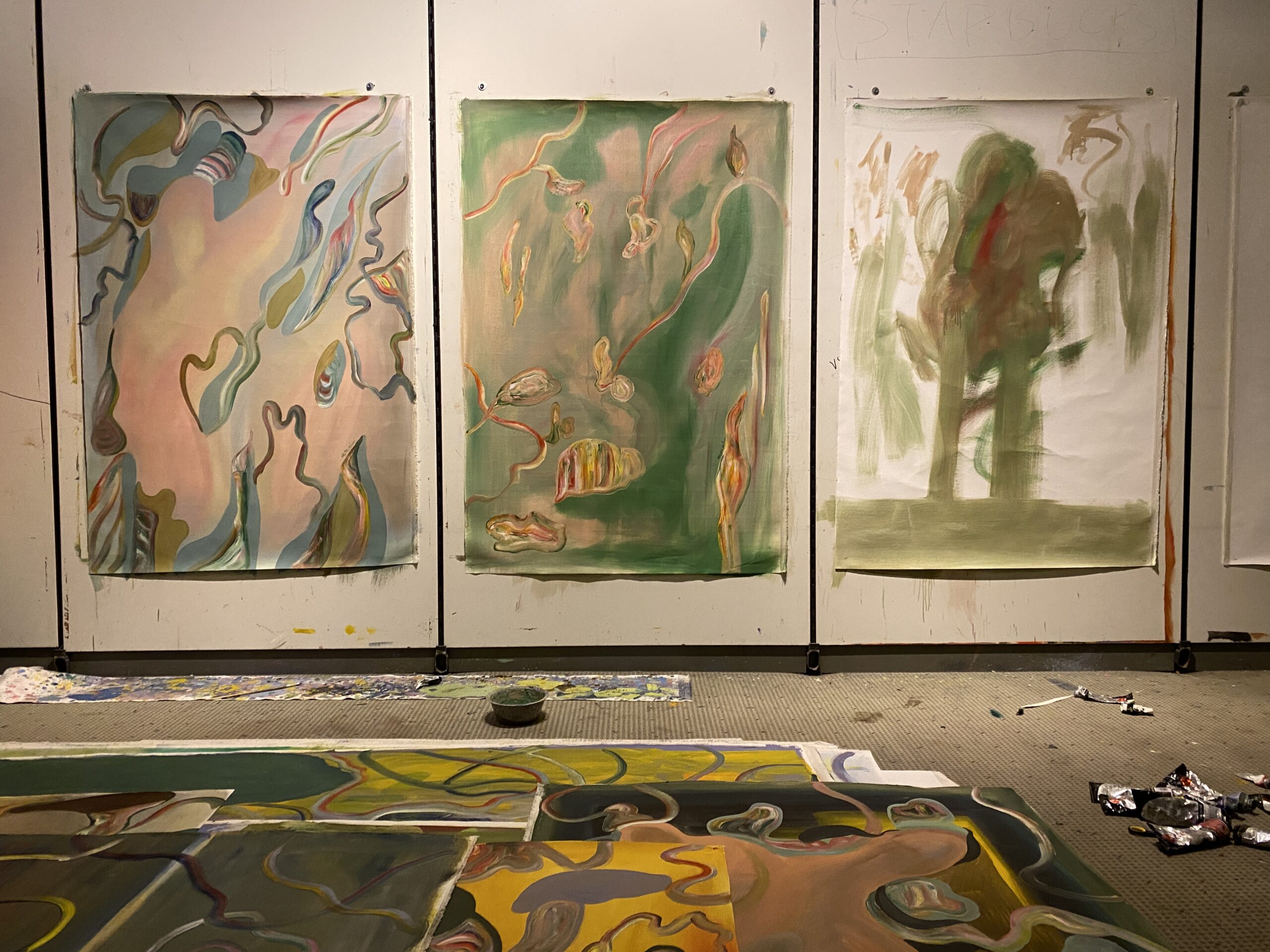
We sat down with Berlin-based artist Hahm Donghyoup to talk about the delicate balance between reality and imagination and the interplay of figuration and abstraction. We also explored why he loves to immerse viewers in colorful, dreamlike worlds that feel both familiar and strange. Catch his latest works on display at GATE TO from April 1st until April 30th, and step inside Hahm’s vivid environments to experience the blurred boundaries of perception and memory.
You studied fashion design at Myoungji University and worked in multiple creative fields before focusing fully on painting. How do these experiences influence your current work?
Hahm: I studied fashion design in Korea. However, I grew tired of it. I felt that studying fashion didn’t quite fit me. I thought that studying design wasn’t right for me. From the moment I lost interest, I began to focus even more on painting. I started to get immersed in painting in a way different from before—something I had done as a hobby since childhood—and as I grew older, I think I began to want to paint life.
Moving from Seoul to Berlin in 2019 marked a significant turning point in your career. How has living in Berlin affected your artistic practice and perspective?
H: There was no particular reason for the decision to leave for Berlin. I simply felt that I had done everything I could in Korea and wanted to try something new in another country. Meanwhile, Germany allowed applications for a working holiday visa for those up to 30 years old, and it was just around the time I turned 30. That is how I ended up coming to Berlin. I definitely feel more freedom here in Berlin. I think that is one of the reasons why I decided to stay here longer. Summer is great in Berlin.
Your work often balances between figuration and abstraction. How do you navigate this tension in your creative process?
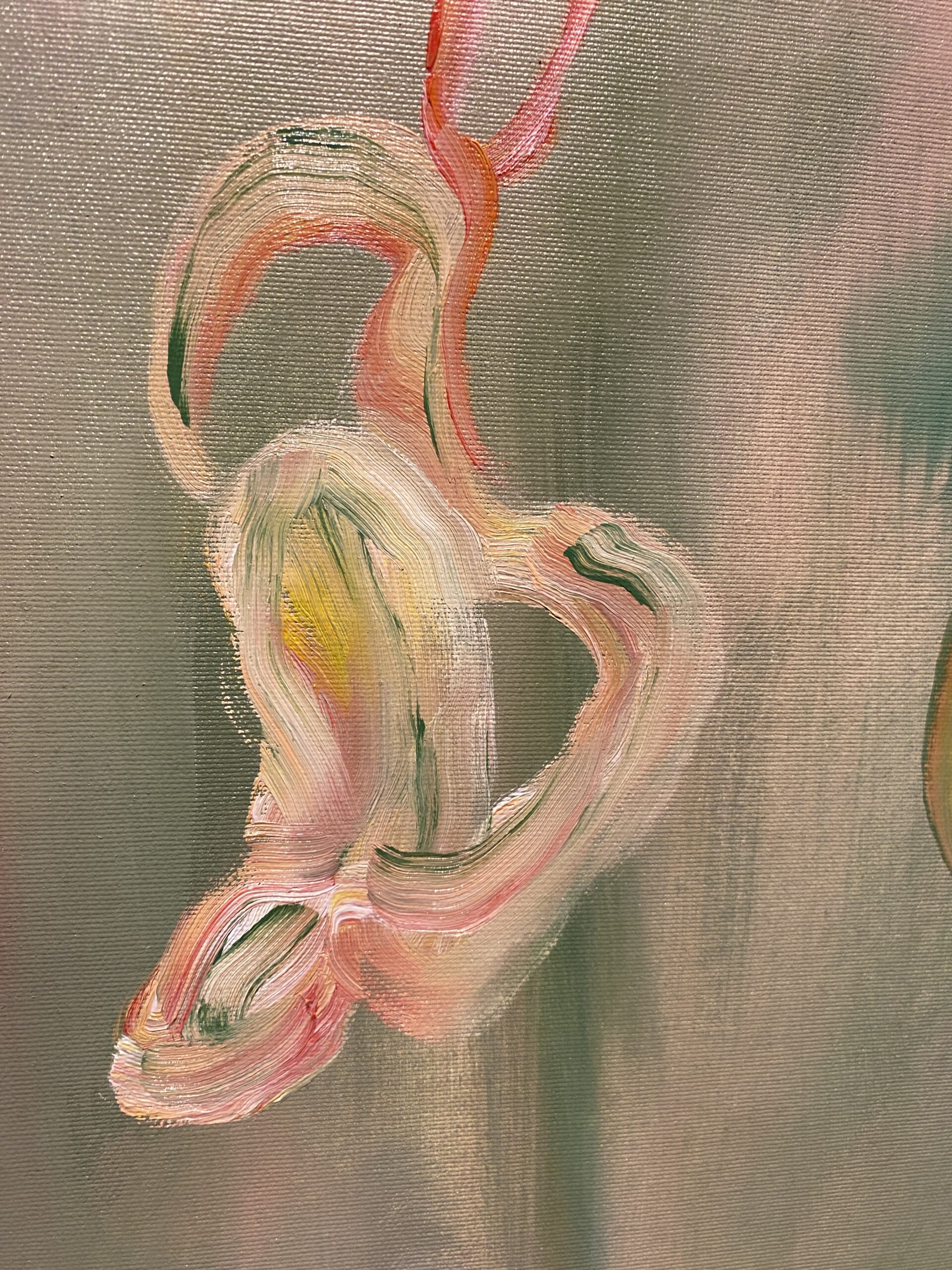
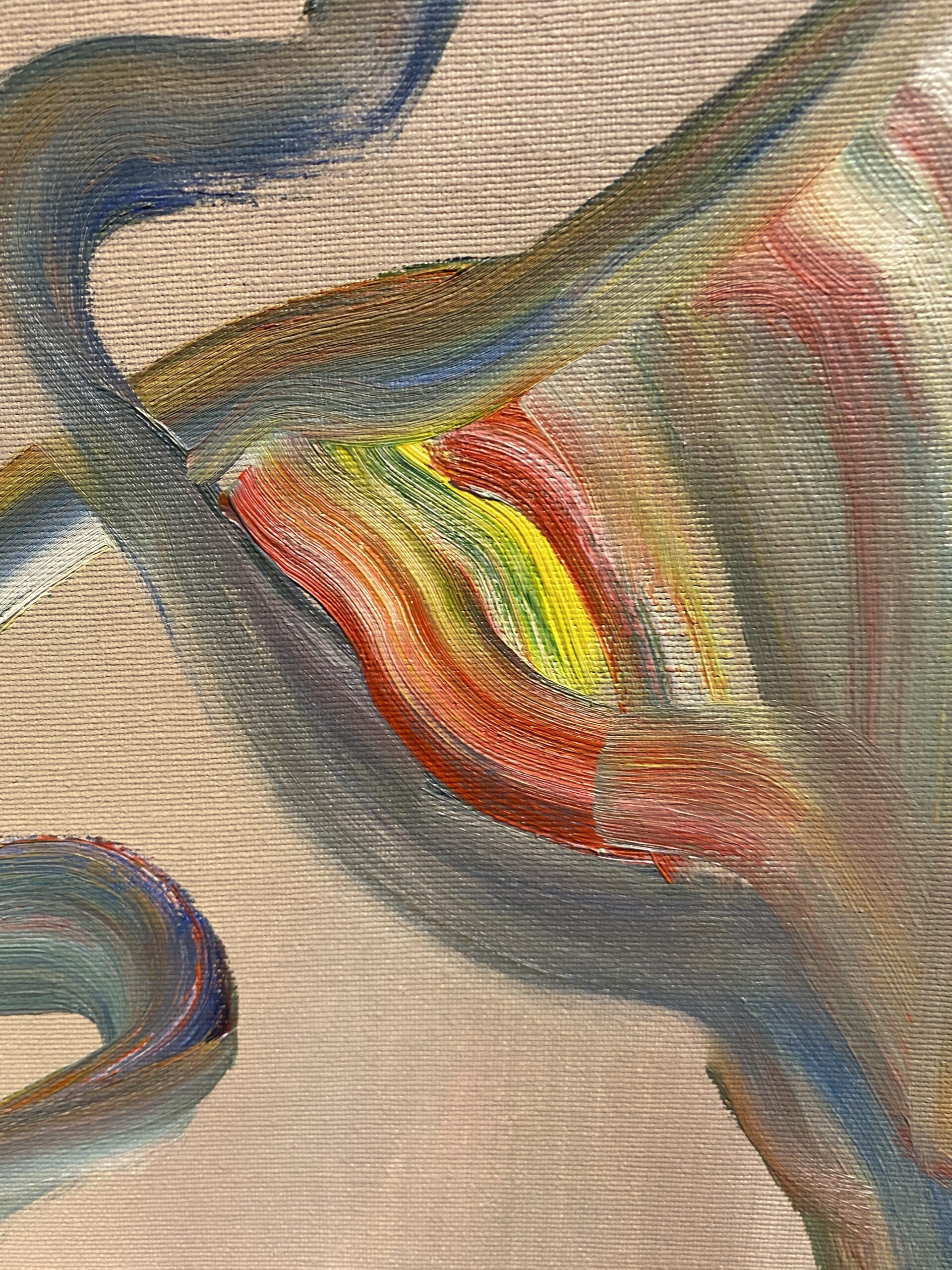
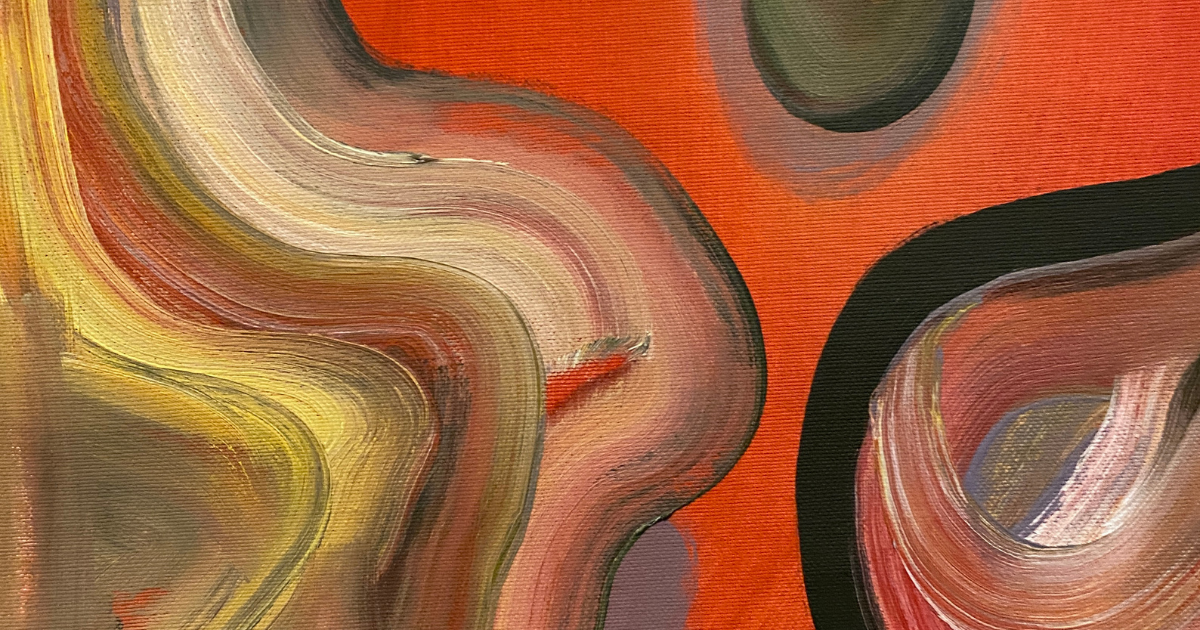
H: I seem to personally prefer things that are abstract yet have a definite form. It doesn’t matter whether that form is made of lines or surfaces. I think the important thing is that a two-dimensional rendering of the three-dimensional world remains, in essence, a picture. Until now, I have been interested in exploring the three-dimensional world in this seemingly simpler, flatter, two-dimensional way. As an extension of this thought, the current paintings appear—simple yet not simple; therefore abstract, yet not entirely abstract; having form, yet not fully so. Existing, yet not existing.
Many of your compositions explore the boundary between the real and the subconscious. How do you decide which moments or visions to capture on canvas?
H: Thinking about many things is my responsibility, and when painting, I must be prepared to make changes. These thoughts are not the viewer’s burden. Although the word „beautiful“ may have many different meanings, I hope viewers can simply accept my paintings as beautiful. I hope they can enjoy the feeling of the painting, the result of my process. I don’t want to burden the viewers with my thoughts and decisions, but if they can recognize them, I‘m also happy.
Your work will be part of GATE TO at Alte Münze. What can visitors expect to experience in this exhibition?
H: With my paintings, I’m not hoping to convey a message to the viewers, I hope they can be consumed simply as pictures. I want viewers to think freely without any other complicated thoughts. But if anybody wants to imply some meaning into the paintings, that’s also their freedom.
Are there new techniques, mediums, or themes you are eager to explore in the coming years?
H: In the future, I don’t know what I will do. My thoughts will change, and the paintings will change a lot as well. I also create digital paintings. I could also create sculptures or installations. Personally, I enjoy the act of making something with my hands for its own sake. However, right now, it seems that I still like painting the most.