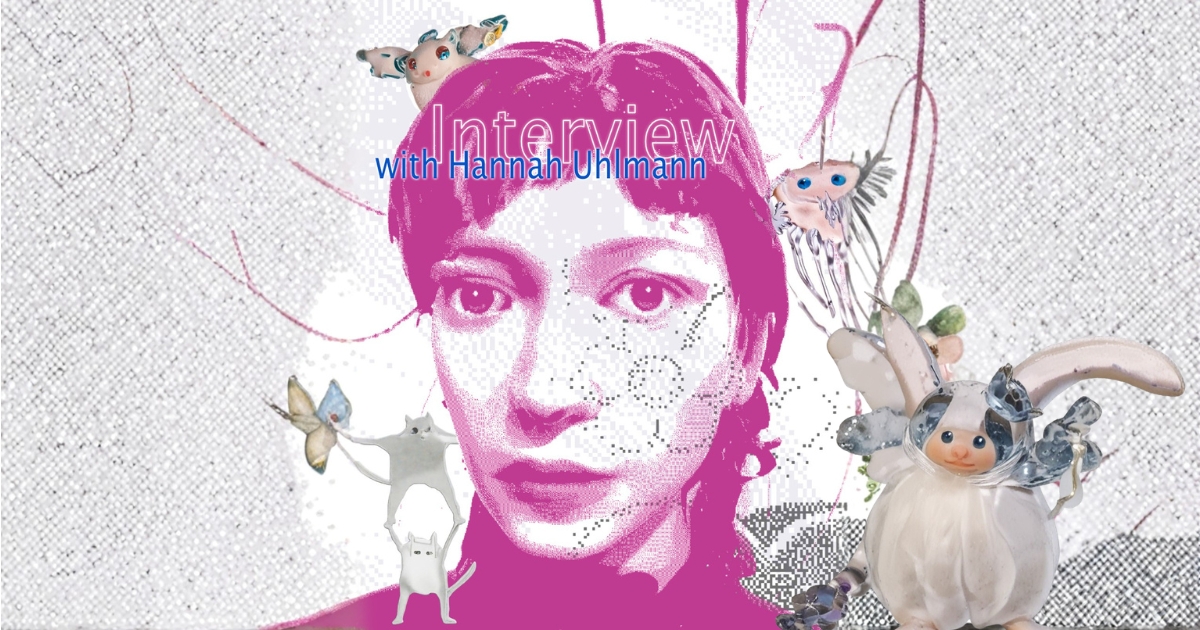
In Conversation with Hannah Uhlmann
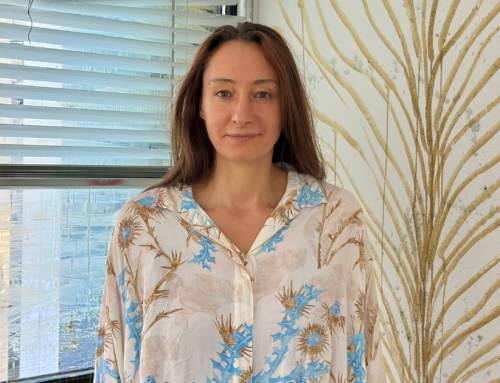
We sat down with Hannah Uhlmann to talk about the tension between digital and physical realities, the poetic potential of textile practices, and how emerging technologies can reshape the way we perceive materiality, memory, and space. Working across photography, installation, 3D design, animation, and performative elements, Hannah creates layered environments where analog and digital processes continuously transform one another.
Currently pursuing her Master’s degree in Media Art and Design at the Bauhaus-Universität Weimar, her recent works critically engage with artificial intelligence while exploring the intersections of contemporary media and traditional craft. At the core of her practice lies a fascination with translation: turning physical realities into digital forms and returning virtual elements back into tangible space.
From May 3 to May 24, Hannah Uhlmann’s works can be experienced at GATE TO, a permanent exhibition space where the former doorman’s house opens a dialogue between art and the urban landscape.
✧・゚:⋆。°✩・:*。˚
Your practice spans photography, video, installation, textiles, and 3D processes. How do you decide which medium to use for a new idea?
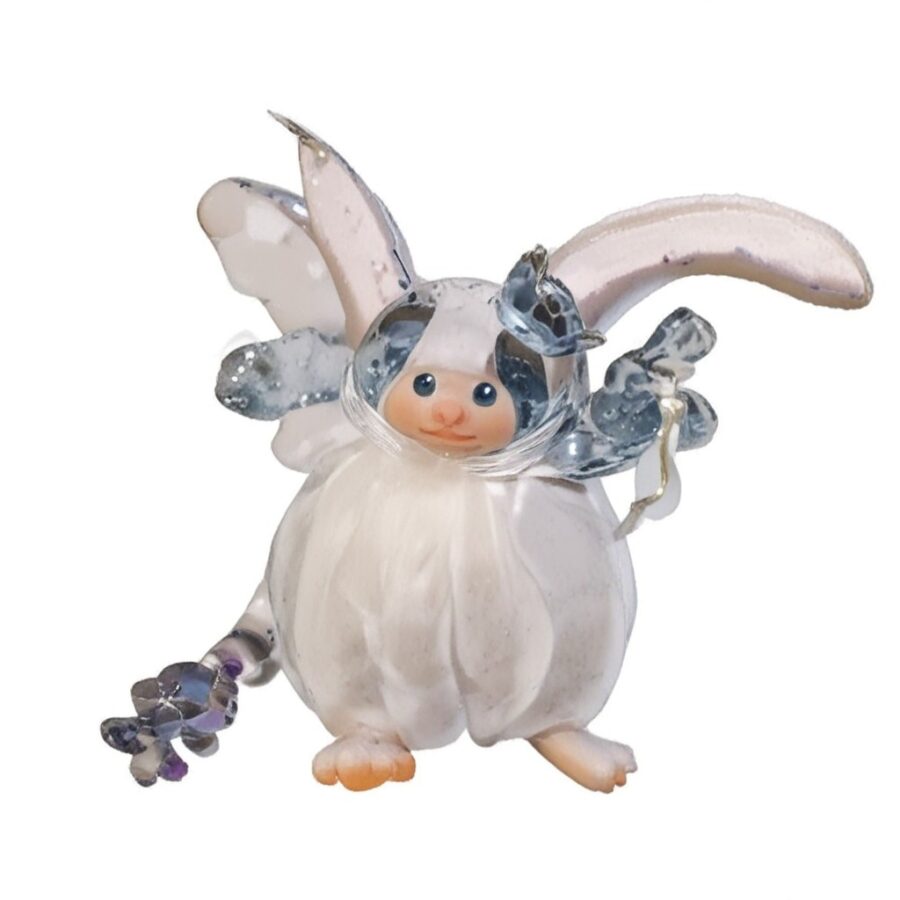
Hannah: Yes, that’s right, I love combining techniques and approaching a topic through different media. Usually it starts with one concrete idea or sometimes just a material I want to work with. Then, while working on it, more and more ideas start spinning in my head about how I could continue. Why not photograph it and bring it into a digital space? And then maybe print it afterwards in 3D to bring it back into the physical room? Or make it interactive, or develop a performance around it? I really enjoy returning to older works and continuing them through a new medium, making them immersive in different ways and letting them evolve over time.
You describe working with “mixed-media and performative elements.” What role does performance play in otherwise object- or image-based work?
H: Performance is a way for me to include myself more directly and to embody the work completely. With images or objects, I like the moment when they somehow come alive and I can interact with them. Sometimes the performance is also part of the installation process itself or the way the work is presented. For example, wearing an outfit that visually connects to the installation and becomes part of it, or spending an hour placing tiny stickers into a public exhibition space like yours and treating the whole action almost like a performance. I enjoy when the boundaries between artwork, body, process, and presentation become fluid.
Your work often explores “everything that contradicts a regulated, rational life.” What draws you to disorder, accident, or interruption?
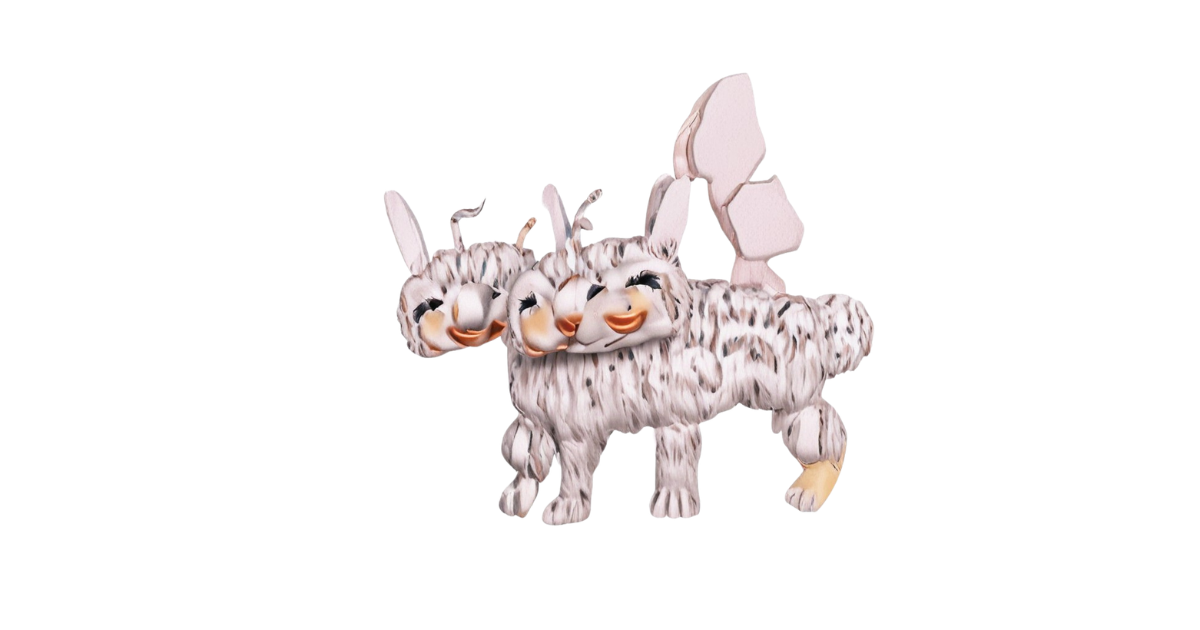
H: Yes, I love chaos. It’s often the moment when people actually start to feel something. When something isn’t perfect, when it confronts you or raises questions, it becomes interesting to me. I like creating those moments intentionally. When I walk outside, I’m constantly observing my surroundings and looking for things that stand out because they feel different or slightly off. Sometimes it’s just an everyday object or scene, but I like placing it in another context and giving it a different kind of attention.
In Dream of a kid, you revisit childhood memory through early digital aesthetics and AI-generated imagery. What made childhood the right lens for this exploration?
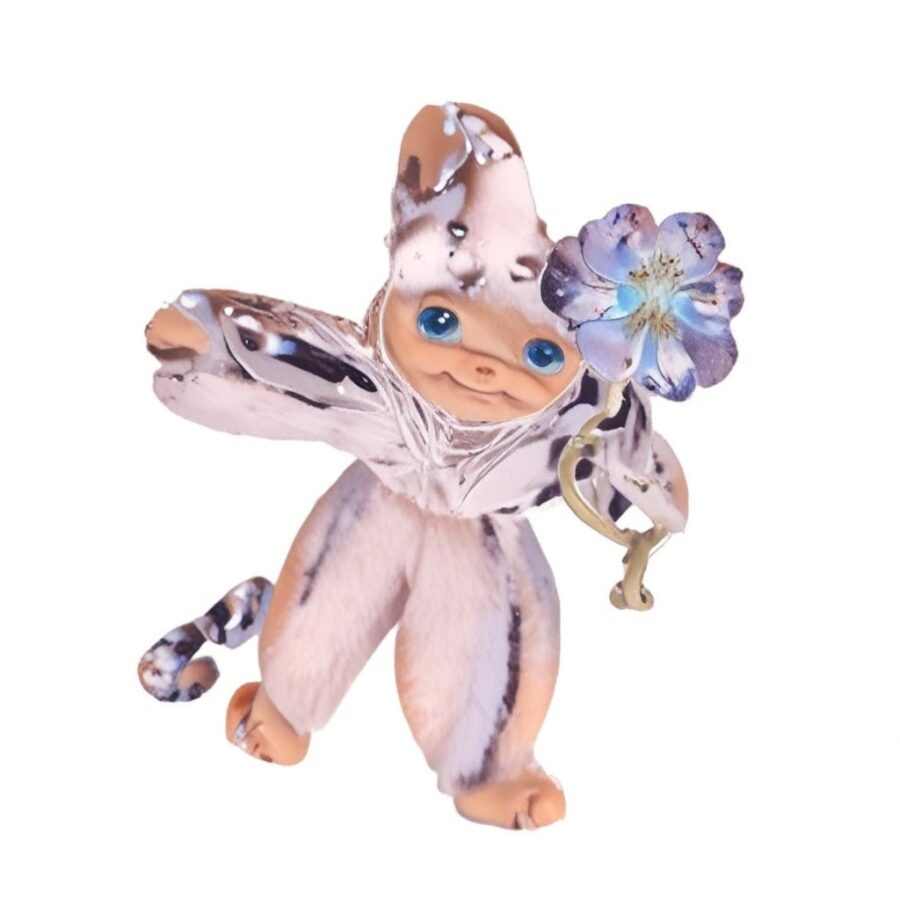
H: It goes back to my own childhood and my early experiences with digital tools. My dad was very young and really into technology, so I started experimenting with paint and creating worlds in early digital games quite at a young age. And now my installation tries to recreate the feeling of looking back at that time. It’s blurry, nostalgic, and impossible to fully reconstruct because technology develops so quickly that even the beginning of the digital era already feels strangely distant. I’m also thinking a lot about what digital creativity meant to me as a child and how exciting it would have felt back then to know that one day I’d be able to animate in 3D or print my ownideas into physical objects. Children are important in this work because they create so freely and unexpectedly, often without questioning logic or boundaries, and I find that very similar to the associative way AI generates images. I work a lot with children, and I’m always fascinated by their honesty, creativity, and completely different way of seeing the world.
Do you see childhood imagination as something we lose, or something that transforms over time?
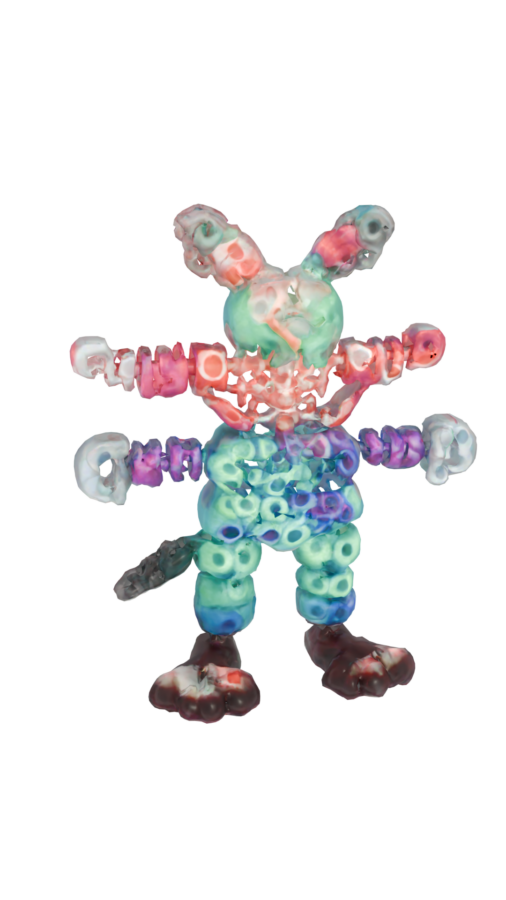
H: I think we definitely lose parts of it if we don’t actively make space for it. Sometimes we need to let go a little, lose control, play around, and allow ourselves to think more freely again. But that’s not always easy, especially in a society that constantly pushes productivity, perfection, and self optimization. Taking time to experiment without pressure is almost a privilege. Still, I think it’s important, and honestly, it makes life a lot more fun.
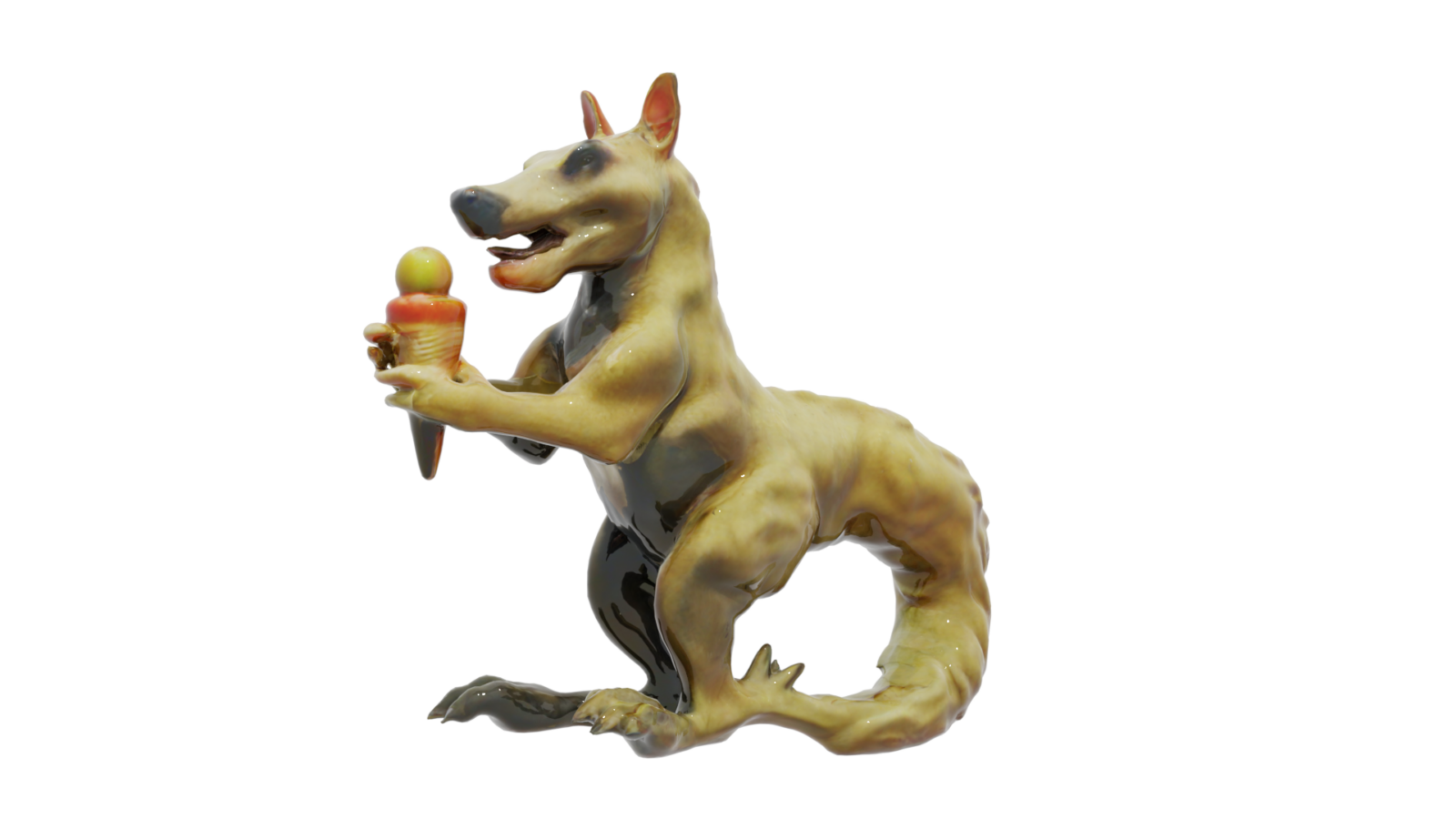
When working with AI-generated imagery, where do you position yourself in relation to authorship and control?
H: Working with AI is definitely controversial, also for me. I try to use it critically and stay aware of the problems and biases that are built into these systems. At the same time, I’m still interested in it as a tool and in pushing its limits to discover blind spots or unexpected results. What interests me is this strange combination of control and loss of control. I still feel like the artist when working with AI because I shape the process through my choices, references, editing, and context, even if the outcome is never completely predictable. I also prefer working with my own material. For this exhibition, for example, I used photographs of stuffed animals I own and combined them with organic 3D forms I built myself. So the generated images are still deeply connected to my own visual world. At the same time, AI systems are shaped by huge image archives and by the people who use them. That can become very one sided, stereotypical, or discriminatory, and it often mirrors the problems that already exist in society. I think that’s something artists should engage with critically instead of ignoring.
Do you think digital tools expand imagination or reshape it entirely?
H: For me personally, digital tools mostly expand my imagination because they build on ideas I already have and help them take form while experimenting. But I also think there’s a danger in using these tools too passively. Then everything starts looking the same and imagination gets replaced by standardized aesthetics and already existing visual patterns.
You currently work with textiles, objects, 3D printing, and animation. How do you think about materiality when so many of your tools are digital?
H: I think that’s exactly the reason why material is so important to me. Because I work digitally so much, I often have the urge to work with my hands and physically feel textures. Sculpting in 3D and doing ceramics it’s both fulfilling to me but it also feels so different. In general, I’m a very tactile person, which is why I love bringing digital projects back into physical space and then continuing to work on them manually. The 3D prints in this exhibition, for example, were painted with many layers of acrylic paint and lacquer. In contrast to the relatively fast printing process, the painting took hours and involved a lot of detailed handwork. I really enjoy this clash between digital production and slow, traditional craft.
What can people expect from Dream of a kid?
H: I created a room full of small surprises that takes visitors into an imagined version of the past. There are figures and images that feel familiar but also open up their own strange little worlds. I hope people enjoy experiencing the installation both during the day and at night because the atmosphere changes completely. And hopefully they take a bit of that childlike energy and openness back into their everyday life with them.
What do you hope changes in viewers when they encounter the work outside of a traditional gallery space?
H: It is really nice to have the opportunity to show my work outside because people can just spontaneously come by. The process of building the installation publicly over several days was also a lot of fun, almost performative in itself, and I think it’s interesting for people to witness the unfinished stages and transitions as part of the work. In general, I think it’s a beautiful idea to use this small space to present very different artistic positions, because everyone responds to the little house differently and transforms it into something completely unique.
✧・゚:⋆。°✩・:*。˚