Voices of Pride: Only Butterflies by Sinem Vardar
Voices of Pride creates space for queer voices that refuse restriction, dilution, or apology. Through writing, art, and lived experience, LGBTIA* creators reclaim visibility, challenge inherited norms, and speak to the realities of identity, resistance, intimacy, and belonging.
✧・゚:⋆。°✩・:*。˚
Only Butterflies
When a butterfly draws close, we rejoice; our filthy being, stained with guilt and sin, feels
innocent, harmless. For an instant, we become something a butterfly would deign to look at.
Everyone longs for that. Despite the bloody hands inside them, the guns and corpses, the
cities and rivers they have ruined, they still want someone to look at them with love and
tenderness, to smile at them, to make them forget the violence within.
Only butterflies. Only they love that way.
I am no butterfly.
✧・゚:⋆。°✩・:*。˚
Snapshots from an Intersectional Cadaver
“Hi, sorry for bothering you. I am Steffi.”
Two young people stand at my door with uniforms of a well-known internet server firm.
“We have been instructed by your property management to undertake an investigation on cable boxes in your building and we would like to inform you about our new offer.”
“Good morning. Cable box? You mean the box for the TV?”
“Yes, we need to check whether you have the proper one. Our new offer combines the fee of the TV with the DSL charge. You would have unlimited surfing. We would first see which cable box you have and then talk about the offer if you are interested. May we come in?”
“I am not interested in a new offer.”
“May we see then your cable box? If you have an old one, we need to report it to the property management.”
“May I see your ID cards?”
They show me their working IDs, and I let them in wishing they would see my cable box for some reason I didn’t really get and leave. I lead them directly to the living room.
“It should be here behind the sideboard. Give me just one minute.”
“It is a cute flat, small but cosy”, she says. She somehow activates my gay radar. It is a 47m2 flat with a bedroom and a living room which opens to the kitchen. They stand in the middle of my living room. The boy is still mute, not responding or asking anything. “The box should be somewhere on the wall below”, she says, and they begin to look for it around. “It is here behind the sideboard, you don’t need to look for it.” I repeat while I empty the top of the wardrobe.
“Do you live alone here?” she asks. “No, with my girlfriend.”
“How long have you been living here? A very good location.” “Yes, it is, indeed. For two years.”
I find it quite penetrant that they are looking at every corner of my living room and I feel unsafe, trying to keep eye contact with them while pulling the sideboard forward. Finally, here, the cable box!
“This is what you are looking for, right?”
They don’t seem to be interested in seeing the box. I get a bit more anxious.
She immediately hands me an advertising flyer with the special new offer on. “It sounds good but am not interested and would like to get back to work.”, I respond.
“Give us just three minutes, let me summarise it for you, if you don’t like it you don’t have to take it.” “Ok, but please only three minutes.”
“You are using the normal internet flat, you said?” “Yes, I am.”
“And you pay an extra fee for TV, even though you don’t have one?” “Hıı hı” I affirm with my nervous Turkish hııı.
A short silence stretches itself around us, in the middle of my living room, wraps us and here we go: “But, where are you from? You have an accent I cannot work out, is it French, or Swedish, or?
“I am from Turkey.” I say, for the umpteenth time since my arrival in Germany three and a half years ago.
“But, how?” she looks baffled. “You don’t wear a headscarf. And you said you live here with your girlfriend! Didn’t you?”
She leaves her advertising and trying-to-be-professional gesture and voice, begins to call me “Du” (informal “you” in German), and her gesture demonstrates a mixture of tension and astonishment.
“Yes, I did.” I say.
“But how is this possible? So you are Turkish and lesbian?” “What do you mean?”
“I mean, how? It is forbidden in Islam, isn’t it?”
“What? How?”
“How?”
Now I am in the same but-how-whirlpool with her, with her abusing hands on my culture, my identity, my private sphere. “How?” The boy is still mute and motionless. “Do you really think that there are no homosexuals in Islamic countries? Because the religion declared it as forbidden it does not mean that there are no homosexuals. Every monotheistic religion forbids it.”
“But I have a Turkish friend, he once said to me, “Steffi, if my daughter was to come out as lesbian, I couldn’t accept it, because Islam forbids it, it is Haram.”
“That your friend interprets Islam as he does doesn’t mean it is the ultimate interpretation. There are lesbians, gays, queer people everywhere in the world.” I get didactic, set the mission of educating this orientalist and homophobic, narrow-minded person.
“But do you go out?”, she asks. “To parties? To Schwuz? or which clubs do you go to? Are you really a lesbian?” she asks and touches my arm.
I get angry. I see this charity-case pacing around me in my living room with her soldiers, breaking her neck to perform the best virtual reality piece, shouting to her soldiers: “In the South people communicate without language, they only touch each other and make gestures and strange sounds to communicate. Oh my god I have such intercultural skills! Did you see how I deployed my intercultural skills? You will also do so! Now! Does she know what lesbians do? What lesbianism necessitates? Is she a real lesbian? Shake her down! Since when are Turkish and Muslim people allowed to be homosexual? Since when do Turks not wear headscarves? Since when do those fake homosexuals stand for Islam? Since when… Oh, I get crazy! Let’s abuse her, if her answers are not enough for our sagacious minds to unfold her existence, shut her and cadaver her! Find out the algorithm behind her existence and reconstruct ours again!”
Obviously, my mission of educating her is not realizable. I take myself out of this but-how-whirlpool and take a breath. “I would not have let you in if I had known I would face something like this. So now leave my flat.”
They keep standing in the middle of my living room. “But what is the problem, I can’t understand.”, she says.
“Leave my flat now, immediately”.
They go towards the door: “But I was just curious, why did you get so angry?”
She is such a good actress, I think, she gets expelled and keeps performing her outstanding piece, now with her sketch “Oh those Turks, Muslims, whatever they are! Those, who are not from us, get so easily neurotic!”
I close the door, walk into the living room and open the window. My body trembles. No belonging. No safety. In a country whose queer movement was so closely linked to anti-racist and anti-colonial struggles and was profoundly shaped by BIPOC and migrant queer activists, a young German can still believe that queerness exists only in Germany, in the Christian West. And in this liberal Germany, a young person can question my sexual orientation and my religion. I came here to be myself, and I cannot simply be.
No more marketing visitors, I say, and murmur The Litany of Survival by Audre Lorde:
“For those of us who live at the shoreline
standing upon the constant edges of decision
crucial and alone
for those of us who cannot indulge
the passing dreams of choice…”
✧・゚:⋆。°✩・:*。˚
About the Author
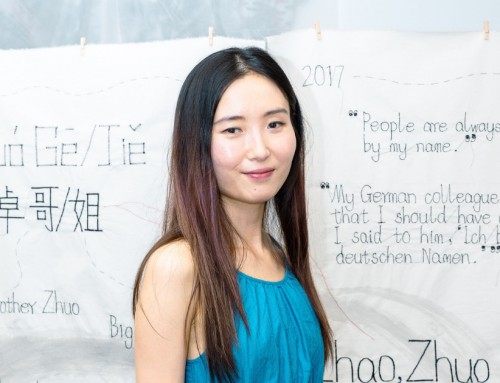
Sinem Vardar is a painter and poet based in Berlin. She was born in Izmir in 1991, studied Political Science and International Relations at Istanbul University, and later completed a master’s degree in Arabic Studies at Freie Universität Berlin and SOAS University of London.
Her poems, short stories, and essays have appeared in various international magazines and newspapers. In her work, she blends visual and linguistic elements, exploring the boundaries between human and other living beings, reality and fantasy, and the conscious and subconscious. Her work focuses on themes of violence, mother, and mourning.
✧・゚:⋆。°✩・:*。˚
Photography
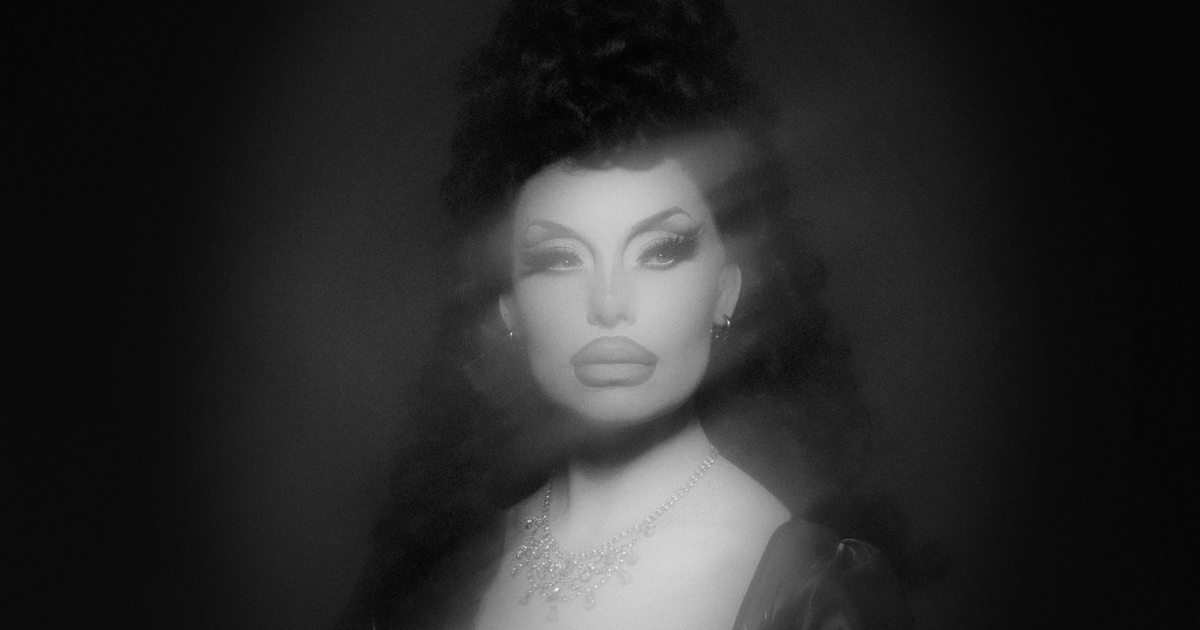
The Voices of Pride campaign features work by Elizaveta Bogachavo, drawn from the project Ephemeral Reveries through the Alchemy of Queerness. You can read more about Elizaveta and the project here.
Instagram: @lisa.bogachova
Website: www.elizavetabogachova.me
Model: Foxglove
Instagram: @foxgloveberlin